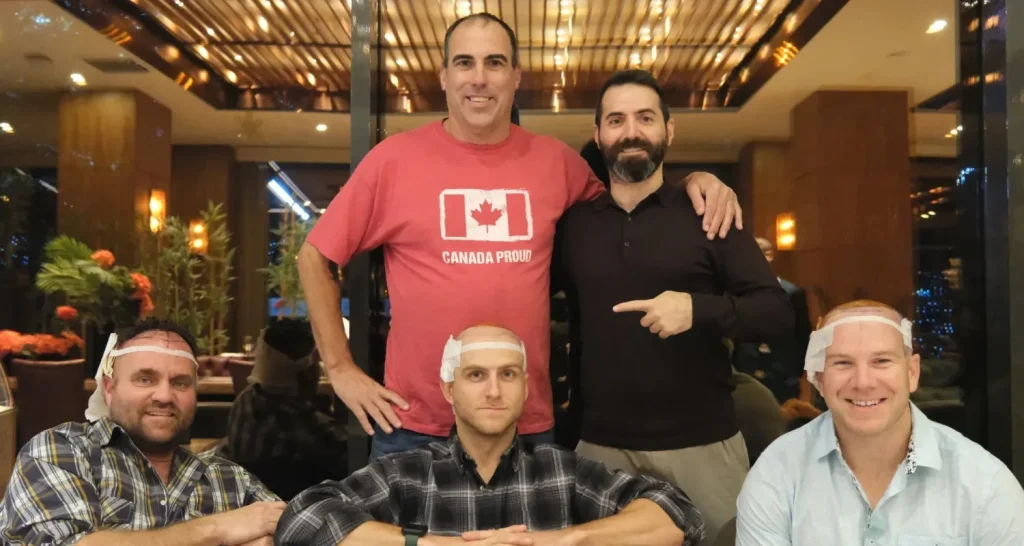
Over the years, I have seen many international Hair Transplant patients arrive in Istanbul with the same kind of nervous energy.
They ask about the transfer, the hotel, the waiting time, the pain, the hairline, the graft count, and the final result. Some questions are practical. Some come from fear. I understand both.
When someone travels to another country for a hair transplant, they are not just booking surgery. They trust a clinic with their appearance, confidence, time, health, and peace of mind.
I have seen this dynamic hundreds of times. A patient may feel anxious about every small detail during the journey. But one year later, when the result has grown in, the message we receive is usually about confidence, relief, and how different life feels. The details of the journey matter, but the result is what stays with the patient long after they return home.
That is why, at UniquEra Clinic, we do not see international patient care as one procedure per day. We see it as a complete journey, and every stage of that journey has to be handled with the same level of care.
The Conversation That Happens Before Anything Else
Most clinics start the patient journey at booking. We start it earlier.
When someone first contacts us, they are usually somewhere between curious and confused. They have seen different prices from different clinics. They have been told they need 2,000 grafts by one place and 4,500 by another. They have read about techniques they do not fully understand, and they are trying to figure out who is actually telling them the truth.
One thing people do not realize is how much damage gets done by unrealistic expectations set too early. A patient who believes they will have the density of a 25-year-old will never be satisfied, no matter how good the clinical work is. A patient who understands what is genuinely possible for their case walks out grateful.
The first consultation at UniquEra is not about moving someone toward a faster decision. It is about helping them understand their own situation honestly. Their hair loss pattern, what their donor area can realistically provide, what a good result looks like for their specific case, not someone else’s before-and-after photo.
That honesty is where the relationship begins.
What the Medical Review Actually Involves?
After the first consultation, the case gets reviewed properly before anything is recommended.
This means looking seriously at the donor area. Understanding how much is available, how it is distributed, what the hair characteristics are. It means thinking about the patient’s age, where their hair loss is likely to progress over the next ten years, and whether the plan we build today holds up against that future reality.
I have seen cases where a patient wanted an aggressive, low hairline and the medically responsible answer was to push back. Not because the work could not be done, but because overusing the donor area early leaves very few options later. A responsible plan protects the future, not just the present.
The technique recommendation comes out of this review, not before it. Whether DHI or FUE Sapphire is right for a patient should not be something chosen off a menu. It should follow what the medical team sees when they properly evaluate the case. The priorities differ. Some patients need hairline precision above everything. Others need broader coverage across larger zones. The technique follows the clinical need.
Arriving in Istanbul: What the First Day Actually Looks Like
By the time an international patient lands, they should already know exactly what to expect. Before travel, we make sure nothing is unclear. The schedule, the clinic visit, the preparation steps, how the day runs. International patients are in a foreign city for a procedure that affects how they look for years. The last thing they need is to feel like they are figuring things out as they go.
On arrival, blood tests and basic safety checks are completed before the procedure moves forward. This is non-negotiable at UniquEra Clinic.
Then comes the in-person consultation, which matters even when we have already spoken on video multiple times. Photos help. Video calls help. But physically reviewing the donor area, the scalp condition, and the hairline in person gives the medical team a level of clarity that remote assessment cannot fully provide. The plan gets confirmed, adjusted if needed, and the patient should leave that room with no remaining questions before stepping into the procedure.
Hairline Design Is Where More Goes Wrong Than People Admit
This is the part I want people to pay real attention to.
A hairline is not just drawn where it looks good today. It has to look natural in fifteen years. It has to work with the patient’s face shape, their age, the direction their hair loss is moving, and how many grafts can realistically be used now versus preserved for future sessions.
Single grafts go along the frontal line because they create a soft, natural edge. Stronger multi-hair grafts sit behind that line where density matters more. Get that wrong and the result looks dense but unnatural. Or the front looks right but everything behind it is too thin.
What I’ve learned from years in this field, from being present in operating rooms long before I had my own team, watching closely, asking questions, seeing what created good outcomes and what created problems, is that the difference between a great result and a disappointing one is usually not the equipment. It is the planning and the experience behind the planning.
Everything in the implantation phase is handwork. There is no machine that controls the angle, the depth, the graft selection. It is judgment built from experience, applied one graft at a time.
The Days After the Procedure Are Not the Finish Line
A lot of clinics treat procedure day as the end of their responsibility. In my experience, that is exactly when patients need the most support.
The next-day wash is part of the process, not an afterthought. The scalp is sensitive. The grafts are new. How that first wash is handled matters, and the patient needs to understand clearly what to do and why, not just receive a printed sheet and a goodbye.
Then comes the shedding phase. This is where international patients who have returned home often start to worry. They are no longer in Istanbul. They cannot walk into the clinic and ask someone directly. The hair they traveled for is falling out, and if nobody prepared them for this, it feels like something went wrong.
It has not gone wrong. Shedding is a normal part of the process. But the patient only stays calm if they were told beforehand, clearly, what to expect and when.
The team at UniquEra remains available for follow-up questions after the patient returns home. Their case does not close when their flight departs. That continuity matters more than most clinics acknowledge.
What Cheap Hair Transplants Actually Cost in the Long Run?
I understand why people search for cheap hair transplants. Price is visible and easy to compare. Everything else about a clinic is harder to evaluate from a website.
But here is what a low price does not tell you: who designed the hairline, how the donor area was assessed, how many cases the team handles in a single day, and what happens to graft quality when a clinic is running at maximum volume to keep costs down. It also does not tell you who answers when you are back home three weeks later and something does not look right.
In most cases, when a hair transplant goes wrong, it is not because of one bad moment in surgery. It is because the planning was rushed, the donor area was overused, or there was no real aftercare. Corrective work is significantly harder and more expensive than doing it properly from the start.
The question worth asking before choosing any hair transplant clinic in Turkey is not only what it costs. It is what is actually included across the full journey, from the first consultation through to a year of follow-up.
Why We Built the Hair transplant Journey This Way?
What I have tried to build at UniquEra Clinic is the version of this experience I believed was missing from the market. One where the patient is treated as someone whose long-term outcome genuinely matters. Where the consultation is honest even when honesty slows the decision. Where the planning accounts for the future, not just the day of surgery.
The patients who reach out a year later are not writing to thank us for logistics. They are writing because something changed for them personally. That is the outcome we are building toward with every case.If you are considering a hair transplant in Turkey and want an honest assessment of your case before making any decision, you can request a private consultation with the UniquEra Clinic team.